
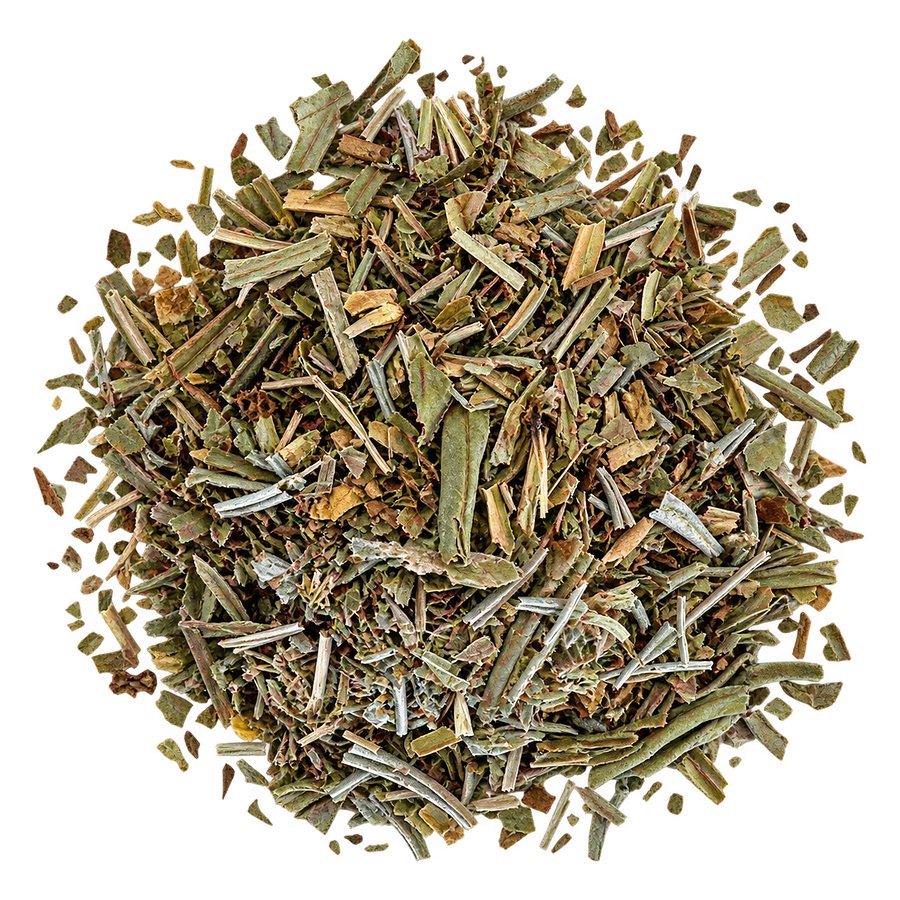
Heimia salicifolia, sold as the Sun Opener and known in Mexico as sinicuichi, carries a strange reputation from written accounts dating back to the 1800s: vision turning yellow, bells and voices sounding as if from a great distance, and later claims that it can pull up distant memories with unusual clarity. None of that is originally a dream claim. The plant’s older use traces to Aztec-descended trance and divination practice, carried forward by later Mexican folk healers, and the oneirogen framing here is a modern layer added on top.
The protocol was three grams, steeped and boiled for roughly thirty minutes, taken as a full tea. Seven dosing nights spread across thirteen days, the first five taken before bed and the final two moved to roughly 3am using wake-back-to-bed. No journaling, no stacking, no induction technique layered in.
None of the classic 1800s effects showed up. No yellow tint to vision, no sense of sound arriving from far away, no unusually vivid pull on distant memory.
The dream measures were close to flat. Emotional intensity held at 3 for all seven nights and hypnagogic imagery held at 1 for all seven, no movement in either. Vividness dipped once, to a 2. Recall is the one number that moved, and it moved the wrong way: three nights at baseline, then three nights in a row at 2, a decline rather than the lift the old reports would predict. There was no lucidity at any point in the run.
The seventh night was the outlier. Recall and narrative coherence both hit 4, the two highest scores of the week, and the dream content was denser than any other night. It is also the least trustworthy data point in the set. Two things changed on that night at once: dosing had moved to the middle of the night instead of before bed, and alcohol earlier in the day had been cut back further than usual. The dream content that night mostly recycled recent work problems and travel, not the distant memories the old accounts describe. One strong night out of seven, with two variables moving together, is not a pattern worth trusting yet.
There is also a preparation question this run never settled. Every written account of sinicuichi describes a cold, sun-fermented tea held for roughly a day, not a boiled decoction. This protocol used heat instead, and it is unclear whether that changes which alkaloids survive, or in what ratio, on top of a dose picture that was already unclear going in. Before this plant gets filed as a dream null, the traditional sun-brewed preparation is worth testing on its own, with timing and alcohol held constant so preparation is the one thing that changes.
One safety note carries over from the earlier write-up on this plant. A 2008 forensic case report documented hospitalization after intoxication from a concentrated Heimia salicifolia extract, and there is no established safe human dose in the literature. This run stayed within a normal tea-strength range and stopped at seven nights by design.